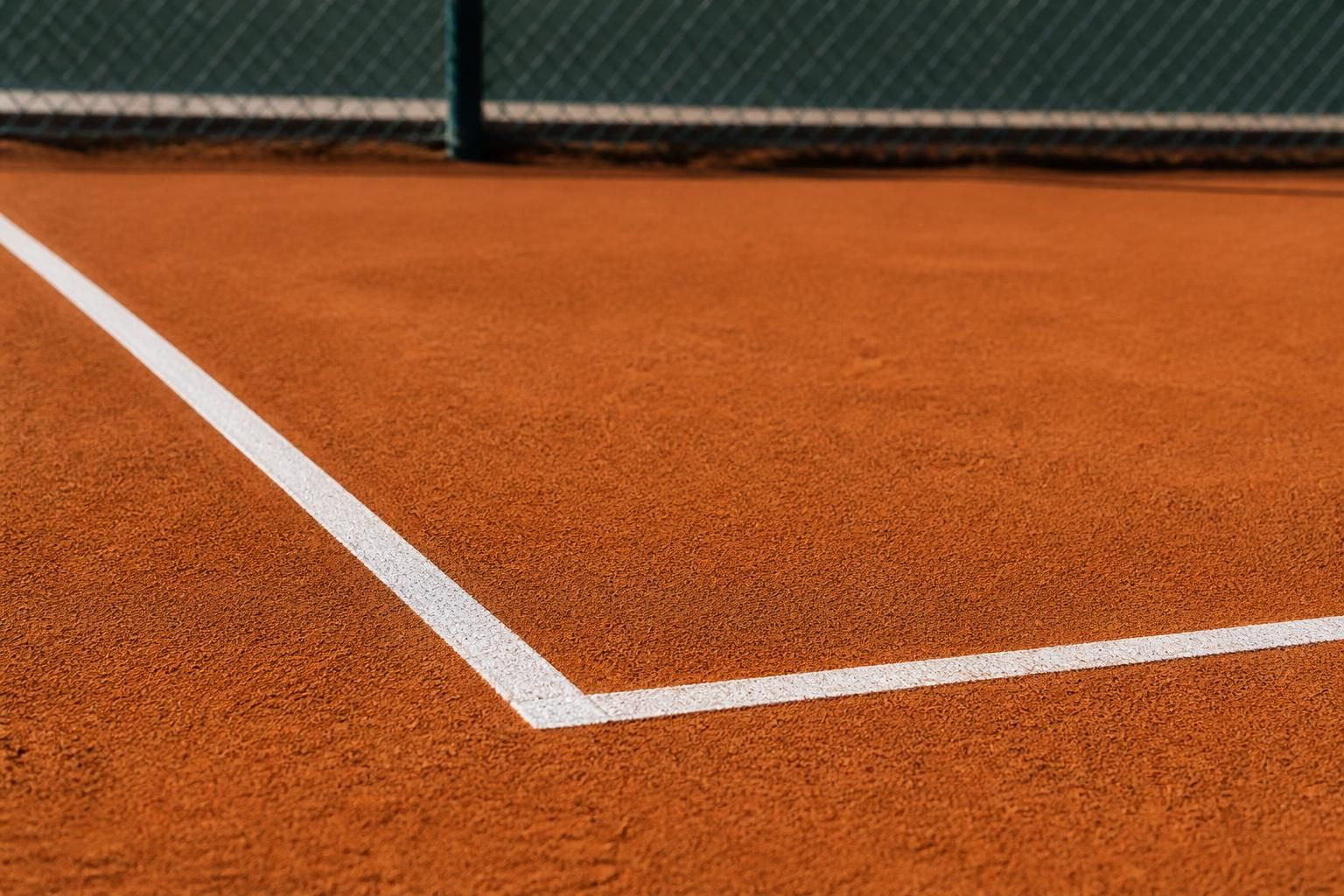
Clay Court Maintenance
Clay court grooming, algae removal, surface work, and net upkeep for private courts across Palm Beach and nearby towns.
Clay court grooming, algae removal, surface work, and net upkeep for private courts across Palm Beach and nearby towns.
Clay Court Solutions handles clay court maintenance in Palm Beach, FL, including grooming, surface application, algae removal, net and wind screen work, and court irrigation. It is for homeowners and court owners who want a clay court that plays evenly again and stays that way. To get started, call or send a request describing what the court is doing, and we will go from there.
Maybe the ball is taking odd bounces, the lines are hard to see, or green patches are creeping across the baseline. Maybe the surface is packed hard in one spot and loose in another, or the net sags and the wind screens are tearing. These are the signs of a court that has gone too long without attention, and in South Florida's heat and rain they tend to show up faster than most owners expect.
Clay court maintenance is the ongoing work that keeps the playing surface, the equipment around it, and the water systems in good shape. After more than 10 years working on courts, we group the work into a few clear tasks:
Grooming and surface application go together. A court that is groomed regularly but never topped up in the worn areas will keep losing material where players move most. Applying surface material where it is needed and then grooming it level is what gives you a consistent bounce from one end of the court to the other.
Algae is a common complaint on courts in humid climates. It makes the surface slick, hides line work, and can spread if the cause is left alone. Removing it is the first step. Minor restoration is what follows when the surface underneath has been left uneven or thin.
Most owners notice a problem during play before they notice it by eye. Watch for these:
Homeowners often use maintenance, repair, and restoration to mean the same thing, but they are different jobs. Maintenance is the regular upkeep that slows wear down. Tennis court repair fixes a specific problem, such as a damaged section, a failed irrigation line, or a broken net post. Minor court restoration brings a tired surface back toward playable condition without starting over.
This page covers day-to-day clay court maintenance, with algae removal, net and wind screen work, and irrigation as part of that. If your court needs a full rebuild or a major structural change, that is a bigger project, so describe what you are seeing and ask us whether it falls under this service or something separate.
Palm Beach County is hot and humid for most of the year, with a wet season that typically runs through the summer and into early fall. Heavy afternoon rain, standing moisture, and long stretches of warmth are what algae likes. Sun and wind also dry out a clay surface quickly, which is why irrigation matters so much for courts here.
Properties in coastal areas also deal with salt-laden air and stronger breezes, which can be hard on nets and wind screens. Most courts here benefit from a regular look at drainage, watering, and surface depth before and after the rainy months.
We serve Palm Beach and surrounding areas, including Manalapan, Jupiter Inlet Colony, Wellington, Boca Raton, and the wider Palm Beach County.
Every court is different, but a maintenance job typically moves through the same stages:
Whoever you hire, a few standards help you judge the result:
Court maintenance does not have a flat answer because the work depends on what the court needs. The main factors are:
A clear written quote should spell out the tasks included, how many visits are planned, any extras that are priced separately, and how changes are handled if the court turns out to need more than expected. If any of that is vague, ask for it in writing before you agree.
Whether you call us or anyone else, these questions will help you compare providers fairly:
It depends on how much the court is played, the weather, and the surface's condition. Heavily used courts and courts that see a lot of summer rain typically need attention more often. A look at the court is the most reliable way to set a schedule.
Many owners schedule algae removal and surface work before or after the wet season, since heavy rain can interrupt the job and undo progress. Describe your situation and we can talk through timing that fits your court.
Pricing follows the scope: court size, surface material needed, algae extent, equipment condition, irrigation repairs, and how many visits are involved. A written quote should list each of these so you can see what you are paying for.
Net replacement and wind screen installation are part of what we do, so they can often be added to a maintenance job. Mention them in your request so they are included in the scope.
Algae usually returns where moisture, shade, and warmth combine, such as low spots, areas near trees, or sections that stay damp after rain. Removing it works best alongside surface and irrigation adjustments that address the cause.
Call or send a request through the site with a short description of the court and what you have noticed. Photos of problem areas help us understand the work before we talk through next steps.
Tell us about your court and what you are seeing. We will get back to you with a clear next step.